Aphids are one of the most common garden pests across the United States. These tiny, sap-sucking insects feed on a wide variety of plants, weakening growth, spreading plant diseases, and attracting ants. Whether they appear on flowers, shrubs, fruit trees, or vegetables, treating aphids early prevents major damage and keeps your landscape healthy.
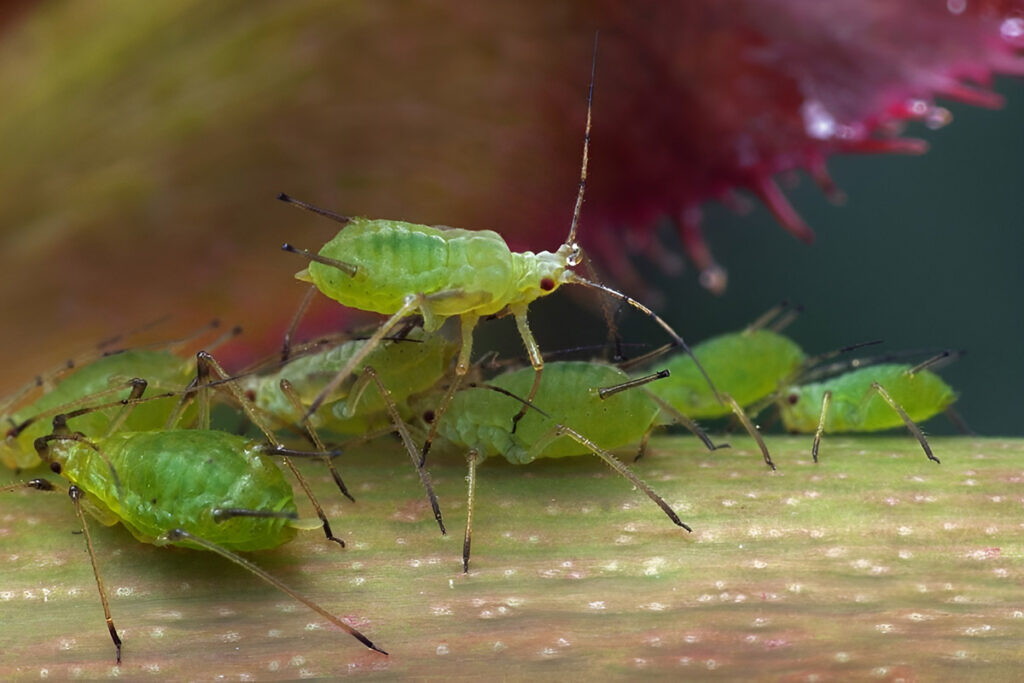
What Are Aphids?
Aphids are small, soft-bodied insects that feed by piercing plant tissue and extracting sap. They come in many colors — green, black, white, brown, yellow, or even pink — and multiply extremely fast, producing large colonies in just days.
Aphids target:
Roses
Tomatoes
Cucumbers
Fruit trees
Houseplants
Flowering shrubs
Vegetables and herbs
They cluster on stems, leaf undersides, buds, and new growth, where plants are most vulnerable.
Signs of an Aphid Infestation
Look for the following indicators:
Curling, yellowing, or distorted leaves
Sticky residue (honeydew) on leaves or outdoor furniture
Ants crawling up plants (they farm aphids for honeydew)
Sooty mold growing on honeydew
Clusters of tiny insects on stems or new growth
Reduced plant growth or wilting
Catching these signs early protects your garden before the infestation escalates.
How to Control Aphids in Gardens and Yards
1. Spray Aphids Off Plants With Water
A strong stream of water from a garden hose dislodges aphids from stems and leaves.
This works especially well for:
Roses
Garden vegetables
Flowering shrubs
Repeat every few days to disrupt their lifecycle.
2. Trim Heavily Infested Areas
If one branch or section is overwhelmed:
Prune it off
Seal in a bag
Dispose of it immediately
This stops aphids from spreading to healthy parts of the plant.
3. Use Natural & Organic Treatments
Insecticidal Soap
Kills aphids on contact by breaking down their protective coating.
Safe for most plants, pets, and wildlife.
Neem Oil
A natural plant-based treatment that:
Kills aphids
Repels future infestations
Reduces fungal issues
Apply early morning or late evening to avoid leaf burn.
Horticultural Oils
Smother aphids and eggs on contact.
Effective during dormant and growing seasons.
4. Attract Beneficial Insects
Encourage natural predators that feed on aphids:
Ladybugs
Lacewings
Hoverflies
Parasitic wasps
Planting herbs and flowers like dill, fennel, parsley, marigolds, and yarrow helps attract them.
You can also buy live ladybugs for targeted release.
5. Use Chemical Treatments for Severe Infestations
When aphids overwhelm large shrubs or trees, stronger treatments may be necessary:
Systemic insecticides applied at the soil level
Residual sprays for ornamentals
Targeted tree injections for large infestations
Professional-grade products provide longer-lasting, season-long control.
6. Control Ants to Reduce Aphids
Ants protect aphids from predators because they feed on honeydew.
To reduce aphid survival:
Use ant baits around the garden
Trim branches touching the house
Remove debris piles where ants nest
Reducing ant activity helps beneficial insects do their job.
7. Keep Plants Healthy
Healthy plants are more resistant to aphid feeding.
To strengthen your landscape:
Water properly (not too much, not too little)
Fertilize according to plant needs
Avoid excessive nitrogen, which encourages soft new growth that aphids love
Improve soil quality with compost and mulch
A strong plant is a less attractive target.
Prevention Tips for Long-Term Aphid Control
Inspect plants weekly during spring and summer
Treat early signs before colonies spread
Remove weeds that host aphids
Maintain proper spacing for airflow
Clean up plant debris around the yard
Use dormant oil on trees during winter
Consistent monitoring is the best way to protect your garden year-round.
When to Call a Professional
Call a pest control or lawn & garden specialist if:
Multiple plants or trees are heavily infested
Treatments aren’t reducing the aphid population
Ants continually return and protect colonies
Fruit trees or ornamentals are losing foliage
You want eco-safe, long-term control solutions
Professionals use targeted systemic treatments, soapy drenches, and integrated pest management to stop infestations and protect your landscape.