Drain flies — also known as moth flies, sewer gnats, or sink flies — are one of the most common bathroom and kitchen pests in U.S. homes. While they don’t bite, their presence often signals a moisture or sanitation issue inside your plumbing system. Quick action prevents them from multiplying and keeps your home clean, odor-free, and safe.
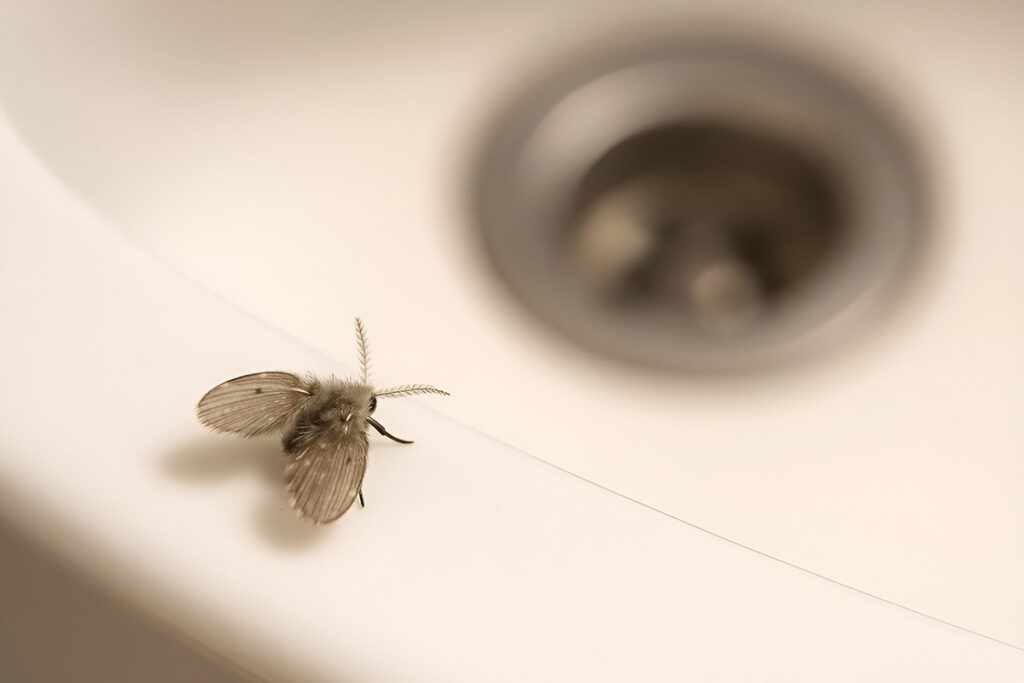
What Are Drain Flies?
Drain flies are tiny (⅛ inch), fuzzy-looking insects with moth-like wings. They thrive in areas with:
Standing water
Organic buildup (slime)
Slow or clogged drains
Leaky pipes and damp surfaces
You’ll most often see them near sinks, tubs, showers, basement floor drains, laundry rooms, and utility sinks.
How to Identify a Drain Fly Infestation
Look for these signs:
Small flies resting on walls near sinks or tubs
Larvae living inside slimy drain coating
Increased activity at night
Clusters of flies emerging from a single drain
A simple test: Place a piece of tape over the drain opening overnight (sticky side down). If flies appear stuck to the tape by morning, that drain is the source.
Step-by-Step: How to Eliminate Drain Flies
1. Clean the Affected Drain Thoroughly
Drain flies cannot survive without the organic slime inside your pipes. Remove it completely:
Pull out debris or hair from the drain cover
Scrub inside with a drain brush
Use hot, soapy water to remove surface slime
Rinse thoroughly
2. Pour a Safe Enzymatic Cleaner
Enzyme-based cleaners break down the organic sludge that drain flies feed on.
Use an enzyme or bio-gel drain treatment
Pour at night so the solution sits for 6–8 hours
Repeat daily for several days
Avoid bleach — it doesn’t dissolve the slime layer and won’t eliminate larvae.
3. Flush the Drain With Boiling Water
Pouring boiling water (carefully!) helps loosen residue and destroy early-stage larvae.
Do this once or twice per day for several days.
4. Fix Moisture Sources
Standing water anywhere in the home can support drain fly breeding.
Repair leaking pipes, faucets, or P-traps
Increase ventilation in bathrooms
Dry mop damp areas after showering
5. Treat Floor Drains & Hidden Spots
Don’t forget:
Basement floor drains
Under-sink cabinets
Utility sinks
Overflow drains in tubs
These areas often harbor hidden larvae.
How Long Does It Take to Get Rid of Drain Flies?
Most infestations clear in 7–10 days after cleaning the breeding sites.
Heavy or long-term infestations may take two weeks.
If flies remain after proper cleaning, you may have:
A broken pipe
A hidden leak under concrete
A septic line issue
In these cases, professional inspection is recommended.
How to Prevent Drain Flies From Returning
Keep your plumbing and kitchen/bathroom areas dry and clean:
Use enzyme drain treatments monthly
Run hot water through infrequently used drains
Avoid letting organic debris accumulate
Fix leaks immediately
Keep garbage disposals clean
Drain flies return only when moisture and organic buildup reappear.
When to Call a Professional
Call a pest control technician if:
Flies persist after 1–2 weeks of cleaning
You suspect damaged pipes or hidden leaks
The infestation spreads to multiple drains
Your home has ongoing moisture problems
Experts use professional-grade bio-cleaners, camera inspections, and targeted treatments to eliminate fly sources permanently.
Final Thoughts
Drain flies are a nuisance but entirely manageable with the right approach. By removing the organic buildup inside your drains, correcting moisture issues, and maintaining regular cleaning habits, you can eliminate these pests and prevent future infestations.