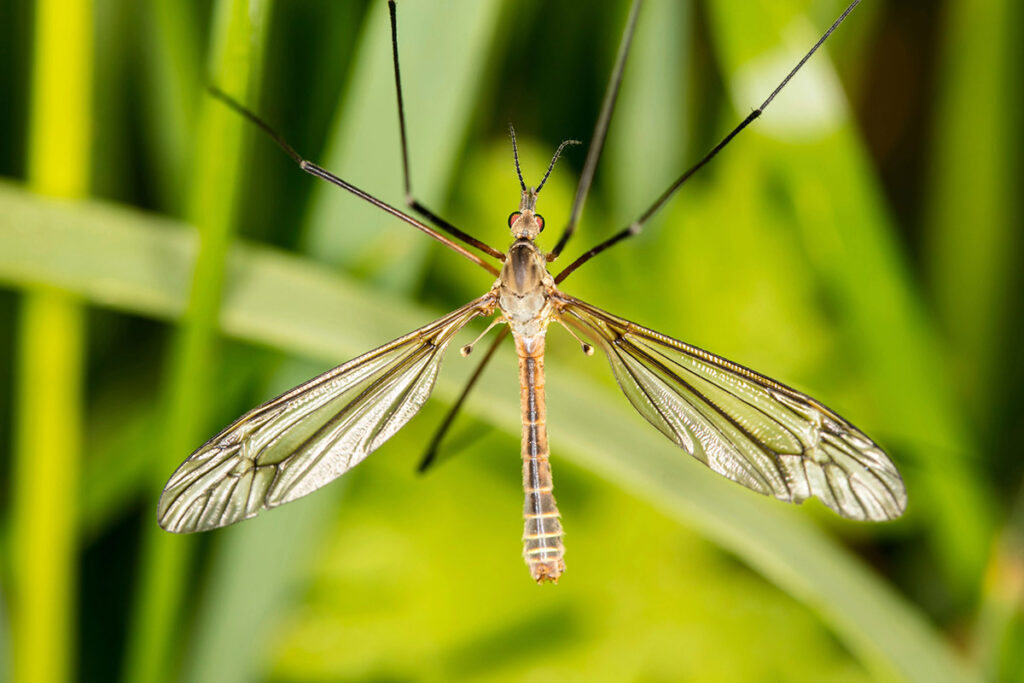
Crane flies often get mistaken for giant mosquitoes, but the real problem lies beneath the soil. Their larvae — called leatherjackets—feed on grass roots, causing patches of thinning, yellowing, or completely dead lawn. Left untreated, a small crane fly population can turn a healthy yard into a patchy, uneven mess within a single season.
In this article, we’ll explain how crane flies damage your lawn, how to recognize early signs of infestation, and what professional treatment involves.
What Are Crane Flies?
Crane flies are long-legged flying insects that appear in late summer and early fall. While adults don’t bite or harm humans, they lay eggs in moist soil. These eggs hatch into leatherjackets—fat, grayish larvae that feed aggressively on turfgrass roots throughout fall and spring.
A heavy leatherjacket population can destroy a lawn from the underground up.
Signs of Crane Fly Damage
Early detection is key. Look for:
Thin or yellowing patches of grass
Dead spots that expand quickly
Birds or raccoons digging in the lawn (they feed on larvae)
Grass that lifts easily because roots have been eaten
Worm-like larvae just below the soil surface
If these symptoms appear in late fall or early spring, crane flies are a likely cause.
Why Crane Flies Are Harmful to Lawns
Leatherjackets feed on:
Grass roots
Young shoots
Tender stems
When root systems weaken, grass can’t absorb water or nutrients. This leads to rapid stress, especially during colder months when the grass is less resilient. Without intervention, entire sections of lawn may die off.
Professional Crane Fly Treatment
1. Inspection and Detection
A technician examines your lawn, checking moisture levels, root structure, and the density of larvae in soil samples. This establishes how large the infestation is and where treatment is needed most.
2. Targeted Larval Control
Professional-grade, lawn-safe treatments are applied to eliminate leatherjackets where they feed. These solutions work below the soil surface, providing fast knockdown while protecting surrounding plants.
3. Adult Crane Fly Reduction
Timed seasonal treatments help prevent adult crane flies from laying eggs, reducing next year’s larval population.
4. Lawn Recovery and Prevention
After larvae are eliminated, grass often needs support. Professionals may recommend:
Aeration
Overseeding
Fertilization
Soil balancing for long-term resistance
Healthy lawns are naturally more resistant to crane fly damage.
When to Treat Crane Flies
The best treatment windows:
Fall: When larvae first hatch and begin feeding
Early Spring: When overwintered larvae feed heavily before pupation
Treating in these windows provides maximum impact and prevents long-term lawn damage.
How Homeowners Can Prevent Crane Fly Infestations
Avoid over-watering your lawn
Improve drainage in shaded or moist areas
Keep grass healthy with proper mowing and fertilization
Schedule annual lawn inspections if crane flies are common in your region
A well-maintained lawn is much less appealing to crane flies and their larvae.
Final Thoughts
Crane flies themselves are harmless, but their larvae can seriously damage your lawn. With the right timing and professional treatment, leatherjacket infestations can be eliminated quickly, giving your turf a chance to recover and thrive. If you notice thinning patches or suspect crane flies, early action is the key to protecting your yard.